
 Shedding light on viable decarbonization paths–Project VisCEADs
Projects and Products
Oxford Roadmapping has expertise in data science, green digital transformation, technology roadmapping, and their combinations and integrations. It provides technology innovations, system innovations, and 📏standardization services.
Since its launch in early 2023, it has participated in or co-created 4 projects, ranging from data product prototyping, science research, and international standardization activities.
Try it by clicking on here !
The dual-carbon management and service platforms (carbon peak and carbon neutral), or simply smart digital platforms of carbon and GHG emission data, aims to introduce such information into the operations and management of enterprises and government organizations at various levels. They embodies the main task of the “twin transition” or green digital transformation of human activities and interactions with the planet.
How might we define, design and develop such a platform?
This project (visCEADs, or visualization of the Carbon Emission Accounts and Datasets) utilizes the following resources released by various organizations. They provide vital information and best practices for industries and government bodies to achieve “precision decarbonization,” by which Oxford Roadmapping means the viable and actionable actions for GHG reduction based on science-based data:
- China’s “Dual-Carbon Management Digital Platform” Industry Standard
- China-led international collaboration research network Carbon Emission Accounts and Datasets (CEADs)
- The International Telecommunication Union (ITU) green digital transformation standards: L.1470 L.1480
- Oxford Roadmapping’s platform business model design for smart digital platforms of carbon neutral management and services (developed based on the above standard and data resources)

... we pledge to uphold the principles that allow sustainability to be built into their development by design, and to delivering the standards that make both business and environmental sense
【Progress】Green Digital Action Toolkit--A. ITU 2023 Green Digital Action@COP28 Presention Slide Translated into Chinese (both simplified and orthodox/traditional Chinese).
Technology standardization requires innovation-sharing and consensus-building process. It requires learning from one another in an application plus technology domain. Standards make innovations work.
How might a company, researcher, policy-maker, or student participate in the process?

【Progress】Technical Input Document submitted to the ITU-T (FG-AI4A-I-132) in December 2023.
How might we help farmers and agri-food sectors, using both digital technologies and carbon negative technologies?
The Green Supply Chain FinTech (GSCFT) project for Digital Agriculture aims to provide innovative digital solutions to provide financing and branding services to agri-food products that substantially cut carbon emissions, including the use of carbon negative technologies such as BECCS. The key is to develop inter-linking and inter-operating standards that connect the “green carbon link” supply chian finance instructments with “net-zero/negative carbon” brands.
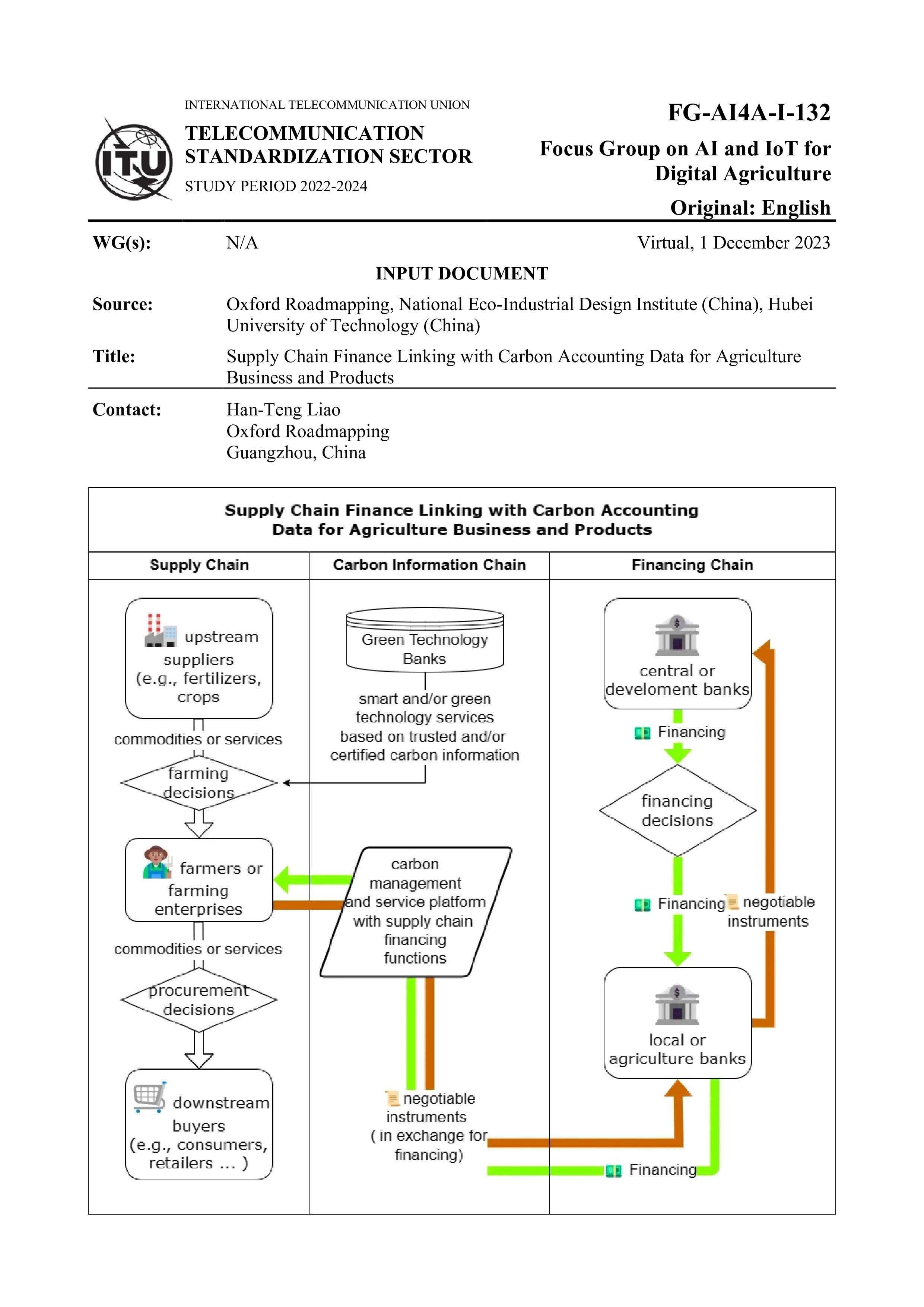
【Progress】This Province-level Research Project has successfully pubslihed **three peer-reviewed journal papers (SCIE Q2) **, even before its formal opening reviewed by experts. Tasks such as drafting the research proposal, writing research articles, and conducting data analysis, have been completed by Oxford Roadmapping swiftly and satisfactorily.
项目名称 –“精准脱碳”之路:E-碳足迹核算打通地方与行业信息流内外双循环
项目迸度与产出
- 2023/02:SCIE Q2论文发表 1篇:供应链知识图谱分析:设计绿色化和数字化转型双化之路线图分类
- 2023/03:SCIE Q2论文发表 2篇:双碳服务及管理平台、ESG教育合作伙伴地图
- 2023/04:开题报告