Oxford Roadmapping Inc. (Oxon8)
specializes in smart digital platforms¹ , green financial technologies (Green FinTech)² , and design innovations³.
Our data and information services, include designing:
- Green FinTech² that aligns industrial chain collaborative innovations, especially for precision decarbonization.
- information flows that drives circular economy and digital economy
- smart digital platforms¹ that advances regional economy + rural revitalization sustainable development.
Explore our projects with digital and socio-technical innovations

Oxford Roadmapping (Oxon8) Latest News
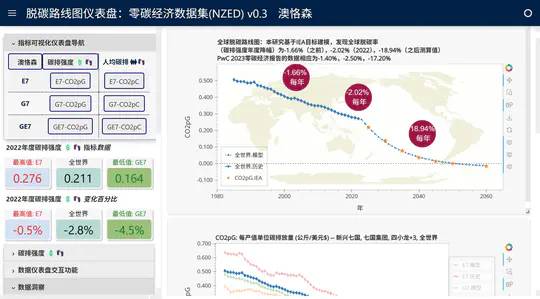
Celebrating World Environment Day, Oxford Roadmapping (Oxon8) shared the latest findings of Net Zero Economy Dataset Visualization, revealing that the world decarbonization rate (the year-on-year carbon intensity percentage change) needs to be at 19% on average by 2050, 9% by 2030, and 10-13% by 2040, so as to meet the 1.5°C target of the Paris Agreement。
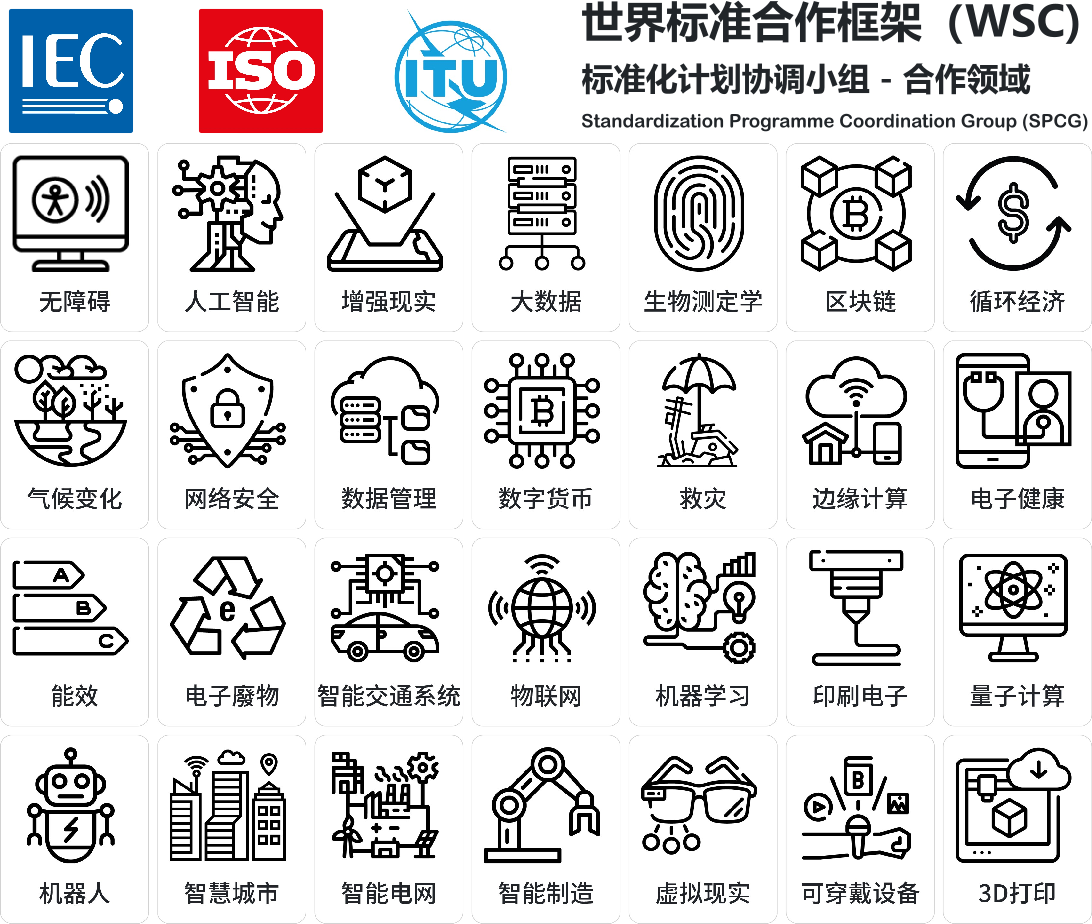
At the COP28, the International Telecommunication Union (ITU) announced the following outcomes of the Green Digital Action:
- Green standards: One joint statement announced by World Standards Cooperation, on the importance of sustainability being built into technical standards’ development by design to achieve net-zero. One Action Plan to environmental sustainability standards. implementation.
- The UN Early Warnings for All (EW4all) initiative to be implemented by the ICT sector before 2027 that ensure protection for everyone, using cell broadcasts and location-based SMS (Satellite service providers are encouraged to join).
- ICT Sector GHG emissions reduction, following the set ICT 1.5°C trajectories.
- A project on “E-Waste Management Regulations” led by Saudi Arabia, to help the regulations in Zambia, Rwanda, and Paraguay.
Marking the roadmap and gaps of standardization, the Call to Action document is among the most important technological documents announced by the ITU at COP 28.
Oxford Roadmapping will continue its 【GDAStandard】project to release Green Digital Action toolbox for wider participation in the global efforts。

Held at the same time and site of the UN Climate Conference COP 28, the IEEE Green Tech, Sustainable Development and Net-Zero Policies and Practices 2023 was held. There, Oxford Roadmapping released the “Precision Decarbonization” Interactive Visualization prototype outcomes. The prototype shows the innovative values of using the Carbon Emission Accounting Datasets (CEADs) in the following two domains:
- Carbon management and service platform
- Carbon neutrality and its international standards and development
The outcomes will be incorporated, as a use-case, into the Green Digital Action Toolkits, to be released by Oxford Roadmapping’s free-to-use 【GDAStandard】project. It will demonstrate the usefulness of green digital action innovation and standardization for green digital transformation via platform-building.
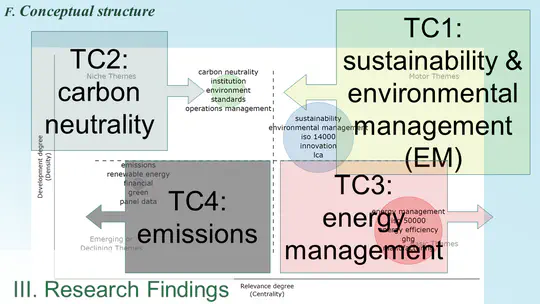
Two conference papers by Oxford Roadmapping and its collaborators were successfully presented at the IEEE Green Tech, Sustainable Development and Net-Zero Policies and Practices 2023:
- Carbon Management and Service Platforms
- Carbon Neutrality, ISO and ITU Standards
This IEEE GTSNZ green conference (IEEE GTSNZ 2023, IEEE GreenTech, Sustainability, and Net Zero Policies & Practices Symposium) was held at the same time and site of the UN Climate Conference COP 28.
Also released at the conference during presentation was the “Precision Decarbonization” interactive infographic prototype that can be further developed into carbon management and service platform as one of the main dashboards. Demonstrating the proof-of-the-concept that combines platform and standard thinking, the prototype demonstrated the potentials of business model and technology roadmap for its use in green digital transformation development, as the core of smart digital platforms.
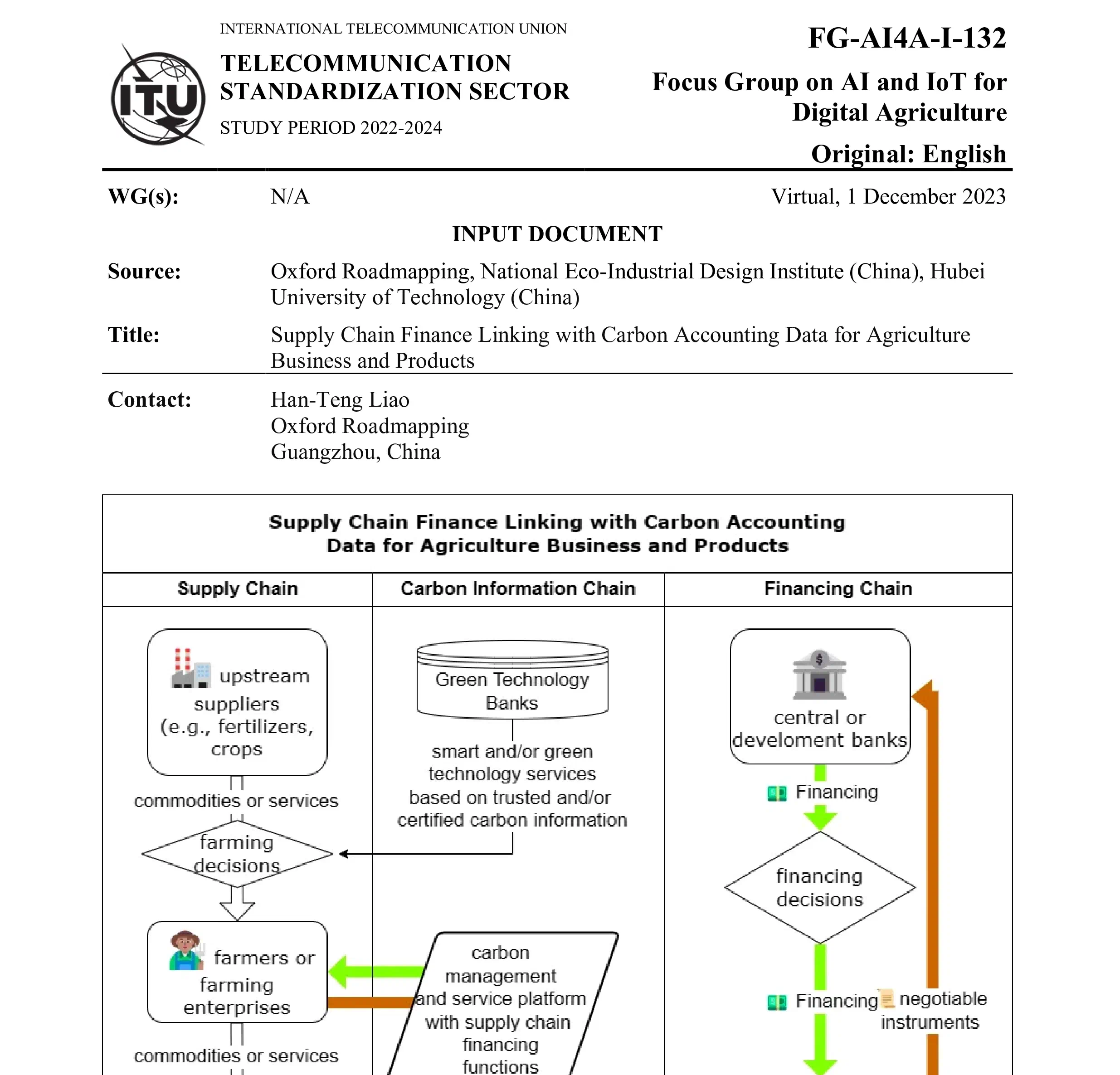
The collaboration work with China’s National Industrial Institute (Eco-design) was successfully submitted and presented at the 8th ITU-T FG-AI4A meeting in December 2023. The technical document, “Supply Chain Finance Linking with Carbon Accounting Data for Agriculture Business and Products” (FG-AI4A-I-132), was presented by Dr. Han-Teng Liao on December 1.
This document was the outcomes by Oxford Roadmapping and China’s National Industrial Institute (Eco-design) research and design work on Conghua conditions and carbon inclusion opportunities and the Greater Bay Area’s “Green Carbon Link” financing instruments, resulting in a pilot project called “Green Supply Chain FinTech for Digital Agriculture”. The collaboration was inspired earlier by the joint conference by the United Nations International Telecommunication Union (ITU) and Food Administration Organization (FAO) on Digital Agriculture and digital transformation for food security.
Coming from the Greater Bay Area (GBA), serving stakeholders — Oxford Roadmapping


Contact Address
- oxon8com@outlook.com
- Oxford Roadmapping Inc. <br/> 75 Wenquan East Rd, Conghua<br/> [World Eco-Design Conference]<br/>澳恪森数智科技服务(广州)有限公司 <br/> 广州市 从化区温泉镇温泉东路75号 [湾区设计开放大学] , Guangzhou, Guangdong,
Footnotes
¹ Smart digital platforms refer the use of digital technologies such as AI, blockchains, cloud computing, data analytics (ABCD), etc., for digital transformation
,
platform businss model innovations. It can more generall refers to as SaaS/PaaS/IaaS/DaaS, or more narrowly as Data as a Service (DaaS).
² Green FinTech
refers to the intersection practices and knowledge of sustainable finance (especially including UN SDGs ) and FinTech (or digital finance) .
³ Design innovations refers to the intersection of innovation studies and design studies, with examples such as the UN-wide agenda UNIDO innovation standards and digital transformation,
digital technologies and transformation for social inclusion,
ITU digital innovations , etc.